Online Medical Billing and Coding Certification Training
Turn Your Interest in Healthcare Into Specialized Skills
You don't have to work directly with patients to make a difference in healthcare. Through Gulf Coast State College's online Medical Billing and Coding course, you can gain the knowledge needed to support healthcare documentation, insurance claims, and reimbursement processes.
This flexible training program covers medical terminology, health insurance, HIPAA compliance, and the coding systems used to classify diagnoses, procedures, and medical services. You will learn ICD-10-CM, ICD-10-PCS, CPT, and HCPCS Level II coding while exploring the healthcare revenue cycle and gaining practical experience with coding applications.
Upon successful completion of this medical billing and coding training program, you can select a voucher for one of three industry certification exams: Certified Professional Coder (CPC), Certified Coding Associate (CCA), or Certified Billing and Coding Specialist (CBCS).
Career Outlook for Medical Billing and Coding Professionals
Medical billing and coding offers an opportunity to pursue a healthcare career focused on information management, accuracy, and administrative processes. Professionals in this field help ensure that patient services are properly documented and that healthcare organizations have the information needed to process insurance claims.
The U.S. Bureau of Labor Statistics (BLS) projects employment of medical records specialists to grow 8% nationally from 2025 to 2035, much faster than the 3% average for all occupations. Approximately 14,000 openings are projected each year, on average, over the decade. The median annual wage for medical records specialists was $51,140 in May 2025. According to Indeed, the average salary of a medical biller in Florida is $52,663 per year.
Certification, experience, and specialization can influence earning potential. According to AAPC's 2025 Salary Survey, noncertified respondents reported average annual earnings of $61,022, while certified respondents averaged $66,186, an 8.5% difference.
The Panama City area also offers opportunities within its established healthcare sector. According to May 2025 BLS data, healthcare practitioners and technical occupations accounted for 5.7% of employment in the Panama City-Panama City Beach metropolitan area. These professionals earned a mean hourly wage of $46.67, while healthcare support occupations represented another 2.7% of regional employment.
Medical Billing and Coding FAQs
What is medical billing and coding? What does a medical biller and coder do?
Medical billing and coding professionals play an important role in connecting healthcare services with accurate records and reimbursement. Medical coders examine patient documentation and assign standardized codes that describe diagnoses, treatments, procedures, and other medical services.
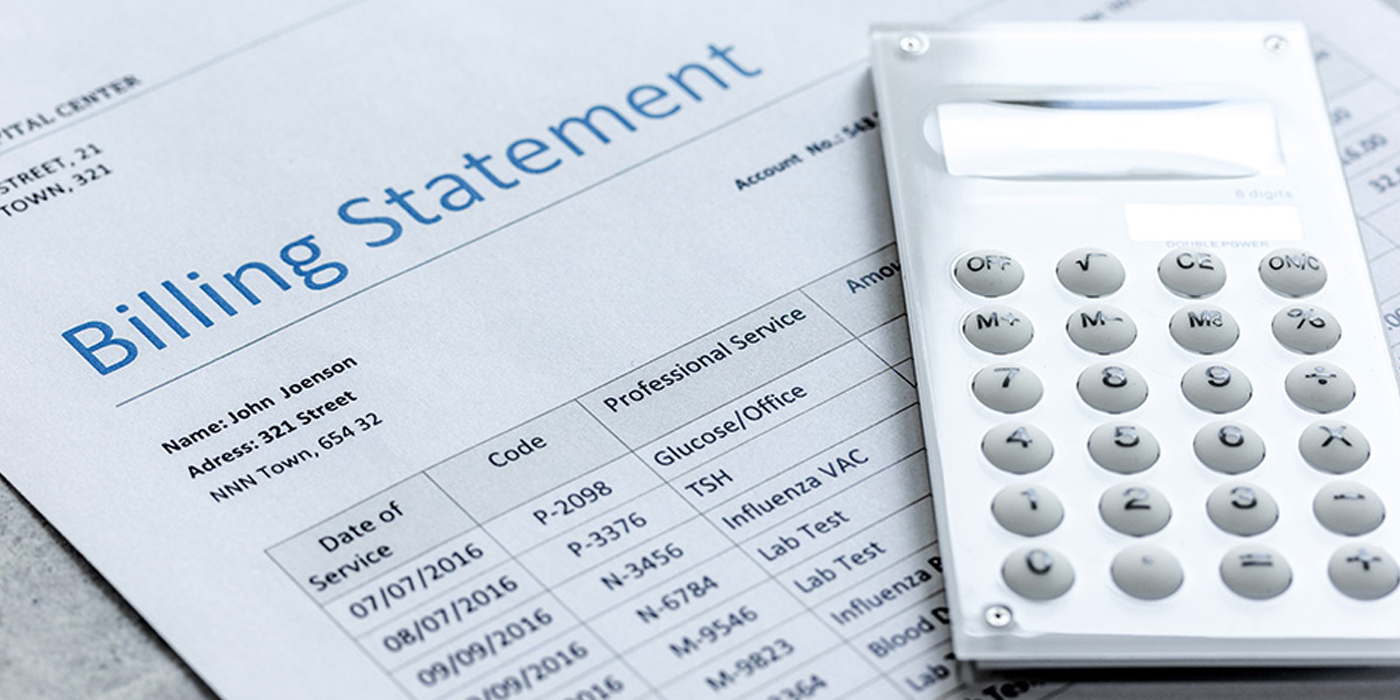
Medical billers use these codes to prepare insurance claims, verify billing information, and help healthcare providers receive appropriate payment. While billing and coding involve different responsibilities, some professionals perform both functions depending on their position.
Where do you work as a medical biller and coder?
Medical billing and coding professionals can work in healthcare facilities and organizations that manage patient information, insurance claims, and reimbursement. Common employment settings include hospitals, physicians' offices, health insurance companies, specialty pharmacies, medical supply businesses, and companies that provide medical billing and coding services.
Additional opportunities may be available with healthcare technology companies, consulting firms, and government agencies. Some employers also offer remote or hybrid positions, depending on job responsibilities, experience, and organizational requirements.
What is a day in the life of a medical biller and coder like?
A medical billing and coding professional typically spends much of the workday reviewing electronic health records, checking documentation, assigning or verifying codes, and processing insurance claims. Accuracy is essential because coding and billing errors can affect reimbursement and create delays in claims processing.
Depending on the role, daily tasks may also involve communicating with healthcare providers, following up with insurance companies, resolving claim discrepancies, and collaborating with other billing and coding professionals. Staying current with coding guidelines, payer requirements, and healthcare regulations is also part of the profession.
What happens when I complete the course?
After successfully passing the final exam, you will receive a certificate of completion through Gulf Coast State College.
You will also receive applicable study materials and a voucher for your choice of the Certified Professional Coder (CPC) exam from AAPC, the Certified Coding Associate (CCA) exam from AHIMA, or the Certified Billing and Coding Specialist (CBCS) exam from NHA.
Learning Objectives
- Understand medical coding terminology, including the structures and functions of the human body
- Identify disorders and medical procedures common to each body system
- Understand legal, ethical, and regulatory concepts, including HIPAA compliance and third-party guidelines for filing insurance claims
- Learn the main coding systems, including ICD-10-CM, ICD-10-PCS, CPT, and HCPCS Level II
- Learn how to code diagnoses, services, and procedures for all systems of the body
- Develop foundational knowledge of medical billing, coding, and medical terminology
- Understand word parts and the structures and functions of the human body
- Gain hands-on exposure to Codify, an encoder application from AAPC
- Prepare for the CPC, CCA, or CBCS certification exam
Prerequisites and Certification Requirements
There are no prerequisites to take this course.
Candidates must have a high school diploma or equivalent to sit for national certification exams. For this reason, it is recommended that you meet this requirement before enrolling.
Upon successful course completion, you can select a voucher for one of the following certification exams:
- Certified Professional Coder (CPC) exam offered by AAPC
- Certified Coding Associate (CCA) exam offered by AHIMA
- Certified Billing and Coding Specialist (CBCS) exam offered by NHA
Online certification exams offered by AAPC and NHA are available only to candidates located in the U.S. AHIMA offers its certification exam in person in the U.S. and internationally.
Additional Certification Information
The Medical Billing and Coding course prepares you for three nationally recognized certification options, giving you the opportunity to pursue the credential that aligns with your professional interests and career goals.
The CPC certification from AAPC focuses on professional medical coding, the CCA credential from AHIMA demonstrates foundational coding competency across healthcare settings, and the CBCS certification from NHA validates knowledge of medical billing and coding procedures.
Students who select the CPC pathway also receive access to AAPC's Practicode Practicum, which provides hands-on coding practice and can help fulfill experience requirements associated with the CPC-A apprentice designation.
Instructors and Support
Nancy Smith
Nancy Smith has over 30 years of experience in the healthcare industry. Her clinical experience includes working as a medical assistant for a network of rural health clinics, and as a medical coder, insurance claims specialist, and medical records auditor. She worked as a medical office manager for ten years, where she recruited and trained all medical assistants. Nancy holds a bachelor's degree in vocational education and has developed and taught medical assistant programs.
LaTisha Cottingham
LaTisha Cottingham has over 20 years of experience in the healthcare industry. She has six years of teaching experience in the field of medical billing and coding and Medical Assisting. Currently, she is employed as an HIM Analyst for a Long-Term Care establishment that is based out of Alabama. Previously she was employed as the lead instructor for the Allied Health Department for a local career institute. LaTisha's field of expertise is in the area of physician-based inpatient coding and Emergency Department coding. The certifications that she holds are as follows: a Registered Health Information Technician (RHIT), a Certified Professional Coder (CPC), and a Certified Clinical Medical Assistant (CCMA). In preparation for ICD-10-CM, LaTisha received her ICD-10-CM/PCS Trainer Certification from American Health Information Association (AHIMA), where she is currently a member. LaTisha is also a member of the American Academy of Professional Coders (AAPC) and the National Healthcare Association (NHA) where she is a test proctor.
Carline Dalgleish
Carline Dalgleish has worked in medical office administration for over 30 years. She holds a bachelor's degree in Business Information Systems, a master's degree in Leadership, and a post-baccalaureate certificate in Health Information Management. She is a Registered Health Information Administrator and an AHIMA Approved ICD-10-CM/PCS Trainer. Dalgleish is the author of an ICD-10 coding system and owns her own consulting firm.
Lydia S. Stewart
Lydia S. Stewart, RN, BSN, currently serves as the Revenue Cycle Manager at a large regional medical center. Lydia has been a Registered Nurse for 23 years, 15 of those years specializing in Critical Care Nursing and supervision. She is responsible for Medical Audits, Charge Capture, and governmental compliance audits and reviews. Lydia is a member of the Louisiana Medical Auditor Association and Healthcare Financial Management Association (HFMA).
Bunny Reeves
Bunny Reeves is the senior ambulatory surgery coder at the Maimonides Medical Center in Brooklyn, New York. She trains student coders at Maimonides Medical Center and previously trained and supervised entry-level coders at Staten Island's St. Vincent Medical Center. Reeves is a Certified Coding Specialist, accredited by the American Health Information Management Association (AHIMA).
Sharon L. Blackford
Sharon L. Blackford, MA, BA, RMA, has over 30 years of experience in the medical field. She has a Master's degree in Organizational Management, a Bachelor's degree in Business Management, and has served as a Registered Medical Assistant since 1994. Sharon was an active duty Clinical Specialist in the U.S. Army for 10 years. Sharon later moved to the Gulf Coast to accept a position as the Director of Education of Blue Cliff College and was promoted to Campus Director.
Stacey O'Brien
Stacey O'Brien has more than 10 years of experience in medical coding and reimbursement. Ms. O'Brien has been a risk adjustment coder for a Medicare advantage plan, audited medical records for a consulting firm, and currently supervises the coding and electronic claims submission process for a group medical practice. She has a bachelor's degree from the University of Pittsburgh and a CPC coding certification from the AAPC.
April Adams
April Adams, M.S., RHIA, CDIP, CPC-I, CPB, CPMA, has worked in the healthcare field since 2011, transitioning from a high school biology and chemistry teacher to a specialist in medical coding and auditing. She focuses on HCC, clinical documentation improvement (CDI), and DRGs and has taught health information management (HIM) courses, including medical terminology, law and ethics, coding, and revenue cycle management since 2018.
April possesses a master's in health information management with a specialization in data analytics. She also serves on the board of the Dallas-Fort Worth Health Information Management Association and holds multiple industry certifications.
Medical Terminology Instructors
Our medical terminology course section is taught by multiple experienced instructors. See here for a full list of these instructors.
Instructor Interaction: The instructor looks forward to interacting with learners in the online moderated discussion area to share their expertise and answer any questions you may have on the course content.
Additional Resources
- Salary of medical records specialists in the US
- Salary of a medical biller in Florida
- Certifying body for CPC exam
- Certifying body for CCA exam
- Certifying body for CBCS exam
Registration Details
This 370-hour course is 100% online and self-paced, allowing you to begin your training at any time. You will have 12 months to complete the course.